
We believe you should understand what you’re buying. So here’s a straightforward explanation of how solar panels work — no jargon, no fluff.
The Basics
Solar panels convert sunlight into electricity. That’s it. But let’s break down what that actually means.
Step 1: Sunlight Hits the Panel
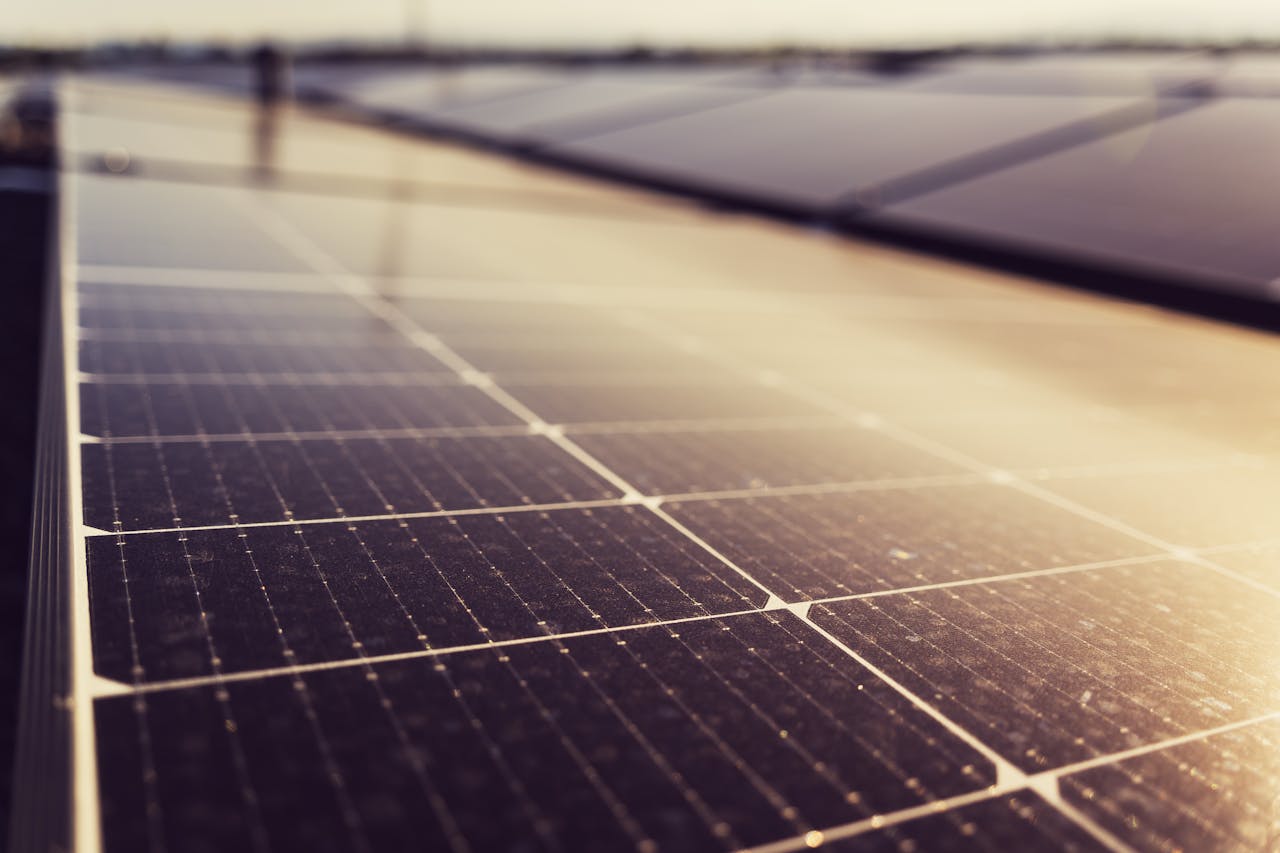
Each solar panel is made up of many small photovoltaic cells (usually 60 or 72 per panel). These cells are made from silicon — the same material found in sand.
When sunlight (photons) hits the silicon, it knocks electrons loose. These electrons are what we use as electricity.
Step 2: DC Electricity Is Generated
The movement of electrons creates direct current (DC) electricity. This is the same type of electricity that comes from batteries.
But your home runs on alternating current (AC) — the type that comes from the grid. So we need to convert it.
Step 3: The Inverter Converts DC to AC
An inverter is a small device (usually installed in your loft or garage) that converts the DC electricity from your panels into AC electricity that your home can use.
Modern inverters are smart — they monitor your system’s performance and can even send data to an app on your phone.
Step 4: Your Home Uses the Electricity
The AC electricity flows into your consumer unit (fuse box) and powers your lights, appliances, and everything else — just like grid electricity.
Your home uses solar electricity first. Only when your panels aren’t generating enough (at night, for example) do you draw from the grid.
Step 5: Excess Goes to the Grid
When your panels generate more than you’re using, the excess flows back to the grid. Under the Smart Export Guarantee, your energy supplier pays you for this.
What About Cloudy Days?
Solar panels don’t need direct sunlight — they work with daylight. So they still generate on cloudy days, just less. In Yorkshire, a well-designed system will generate useful electricity for around 8–9 months of the year, with peak production from April to September.
How Long Do They Last?
Most panels come with a 25-year performance warranty, guaranteeing at least 85% of original output after 25 years. Many panels installed in the 1990s are still going strong today.
Questions?
If anything above doesn’t make sense, or you want to know how it applies to your specific home, just ask us. We love talking about this stuff — and we’ll always explain it in plain English.